

Share to
Double-Concave Lenses
Still deciding? Get samples first, Contact US !
View similar products
Tag list
- Detailed
-
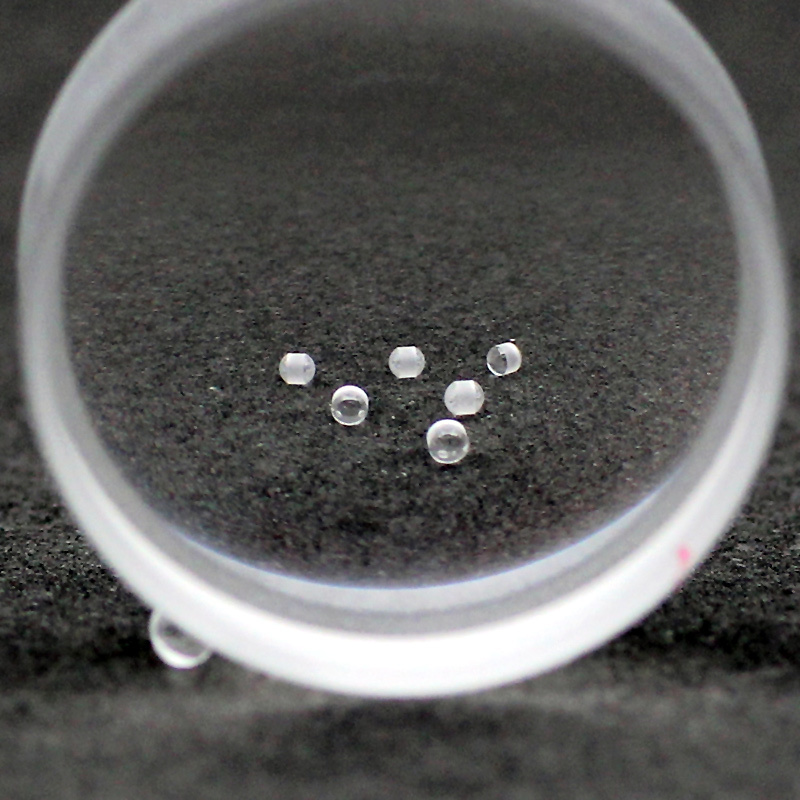
A double concave lens features two concave spherical surfaces and a negative focal length. It diverges incident light beams, and is widely applied for beam expansion, collimation and projection in optical systems. When combined with other optical lenses, it effectively suppresses chromatic aberration and other optical aberrations to optimize imaging quality.

Parameters
Specification
Material
Optical Glasses, Fused Silica, Sapphire, Infrared Material, etc.
Diameter Range
0.5 ~ 600mm
Diameter Tolerance +0.00/-0.02mm Surface Irregularity λ/10@632.8nm Surface Quality 10-5 Focal Length Tolerance ±0.5% Centration 30 arc sec. Clear Aperture > 90% of diameter Bevel 0.2mm × 45° Coating As customer's request What is a Double Concave Lens?
Also named biconcave lens, this optical component is structured with two inward-curving spherical surfaces. Its unique physical construction brings a thin central section and thicker outer edges, which endows the lens with negative focal length and inherent beam divergence performance.
For actual physical objects, double concave lenses always generate upright, downsized virtual images that stay on the identical side of the lens as the object. Owing to its capability to spread out incident light, the part is widely categorized as diverging negative spherical lens in optical engineering. Besides theoretical features, it is extensively applied in beam expansion, projection equipment and optical system focal length adjustment, and matches well with other lens parts to correct chromatic aberration and optimize overall imaging quality.
Key Properties of Biconcave Lenses
Biconcave optical lenses are fabricated with two inward-curved faces sharing identical curvature radii. Thanks to their negative focal length attribute, these diverging optics support versatile uses including beam collimation, focal length tuning for optical assemblies, plus magnification adjustment to scale target images up or down. With inherent negative focal power, double-concave elements rank as common choices across imaging systems and collimation setups. Anti-reflection coated variants perform reliably within visible and near-infrared spectral ranges for diverse industrial optics projects.
Double-Concave Lenses
Still deciding? Get samples first, Contact US !
Products Category
Tag list
Inquire Now
Note: Please leave your email address, our professionals will contact you as soon as possible!


Product Consulting
The company has been adhering to the enterprise tenet of people-oriented, honest management and customer first, providing customers with high-quality products and after-sales service.
Focus on us
Focus on us
Order Hotline
Telephone:+86 431 85660988
E-mail:
info@jtoptecs.com
Address:4655th FANRONG ROAD,HIGH-TECH AREA, CHANG CHUN, 130012,China


All rights reserved:Changchun Jiu Tian Optoelectric Co., Ltd.